How NATO Shapes Global Peace and Modern Defense
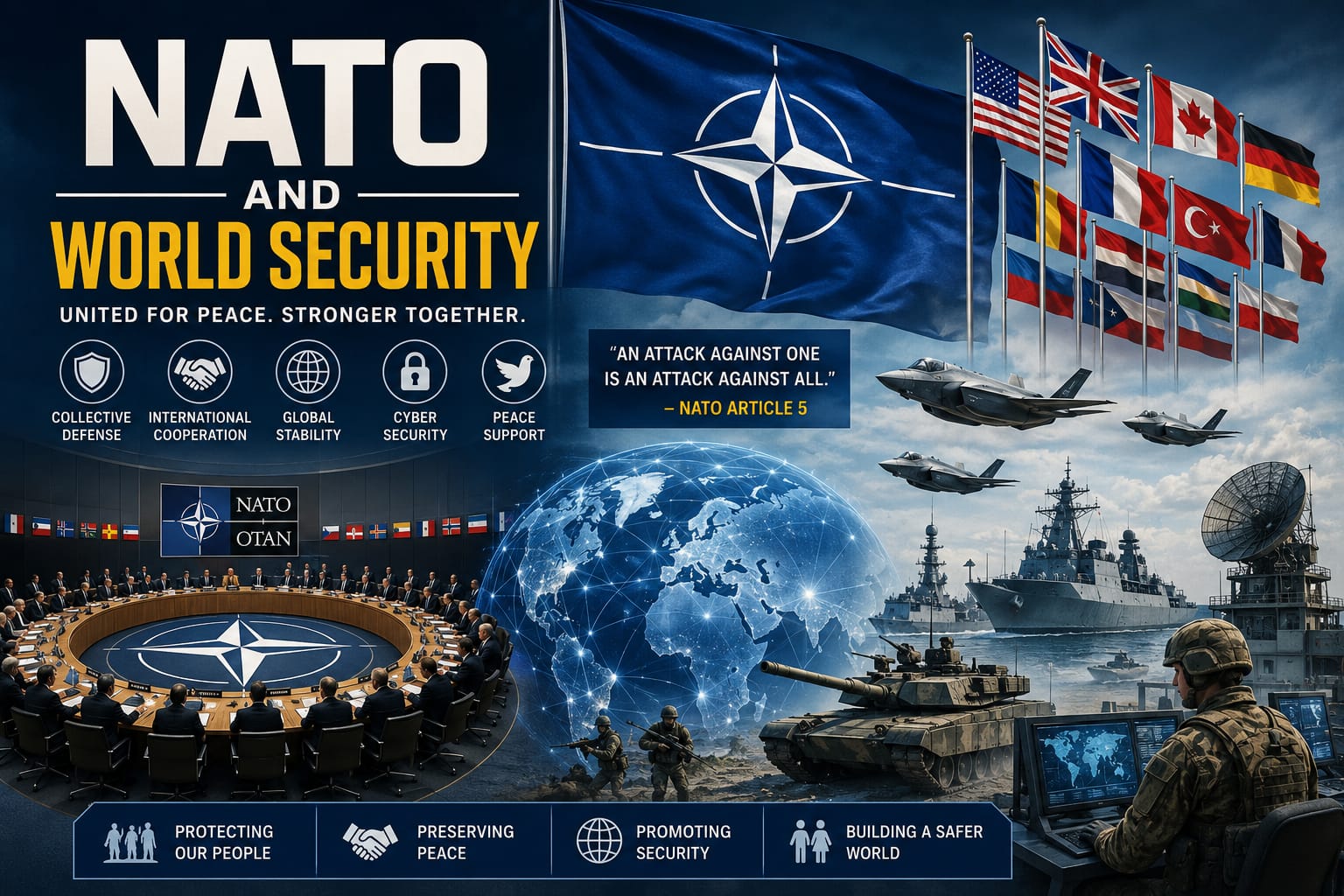
The modern world faces growing security challenges, from cyberattacks and terrorism to regional wars and geopolitical tensions. In this changing environment, the North Atlantic Treaty Organization, commonly known as NATO, continues to play a major role in maintaining international stability and collective defense.
What Is NATO?
NATO was established in 1949 after World War II to protect member nations from military threats. The alliance originally began with 12 countries, but today it includes more than 30 member states from North America and Europe.
The organization operates on the principle of collective defense, meaning an attack on one NATO member is considered an attack on all members.
NATO’s Main Objectives
- Collective Security
NATO’s primary mission is to protect member countries from external threats. Through military cooperation and joint defense strategies, NATO aims to prevent conflicts before they begin.
- Counter-Terrorism
The alliance supports international operations against terrorism and extremist groups. NATO also helps member countries improve intelligence sharing and border security.
- Cybersecurity Protection
In today’s digital world, cyber warfare has become a major concern. NATO invests heavily in cyber defense systems to protect critical infrastructure and government networks.
- Crisis Management
NATO often participates in peacekeeping missions, humanitarian support, and emergency operations during international crises.
NATO and the Russia–Ukraine Conflict
The Russia–Ukraine war has significantly increased NATO’s importance in global politics. Many European countries have strengthened their defense systems, while NATO has expanded military cooperation and strategic planning across Eastern Europe.
This conflict has also raised debates about global security, energy dependence, and the future balance of power in the world.
Challenges Facing NATO
Despite its strength, NATO faces several modern challenges:
Rising geopolitical tensions
Cyberattacks and digital warfare
Terrorism and extremist networks
Increasing military competition between major powers
Economic pressure on defense spending
Many experts believe NATO must continue adapting to new threats in order to remain effective in the 21st century.
The Future of World Security
Global security is no longer limited to traditional warfare. Artificial intelligence, space defense, cybersecurity, and information warfare are becoming key parts of modern defense strategies.
Countries around the world are investing in advanced military technology and international partnerships to secure their future.
Conclusion
NATO remains one of the most influential defense alliances in the world. As global threats continue to evolve, the organization plays an important role in maintaining international stability, strengthening military cooperation, and protecting democratic nations.
The future of world security will depend not only on military power but also on diplomacy, technology, and global cooperation.




Leave a Reply