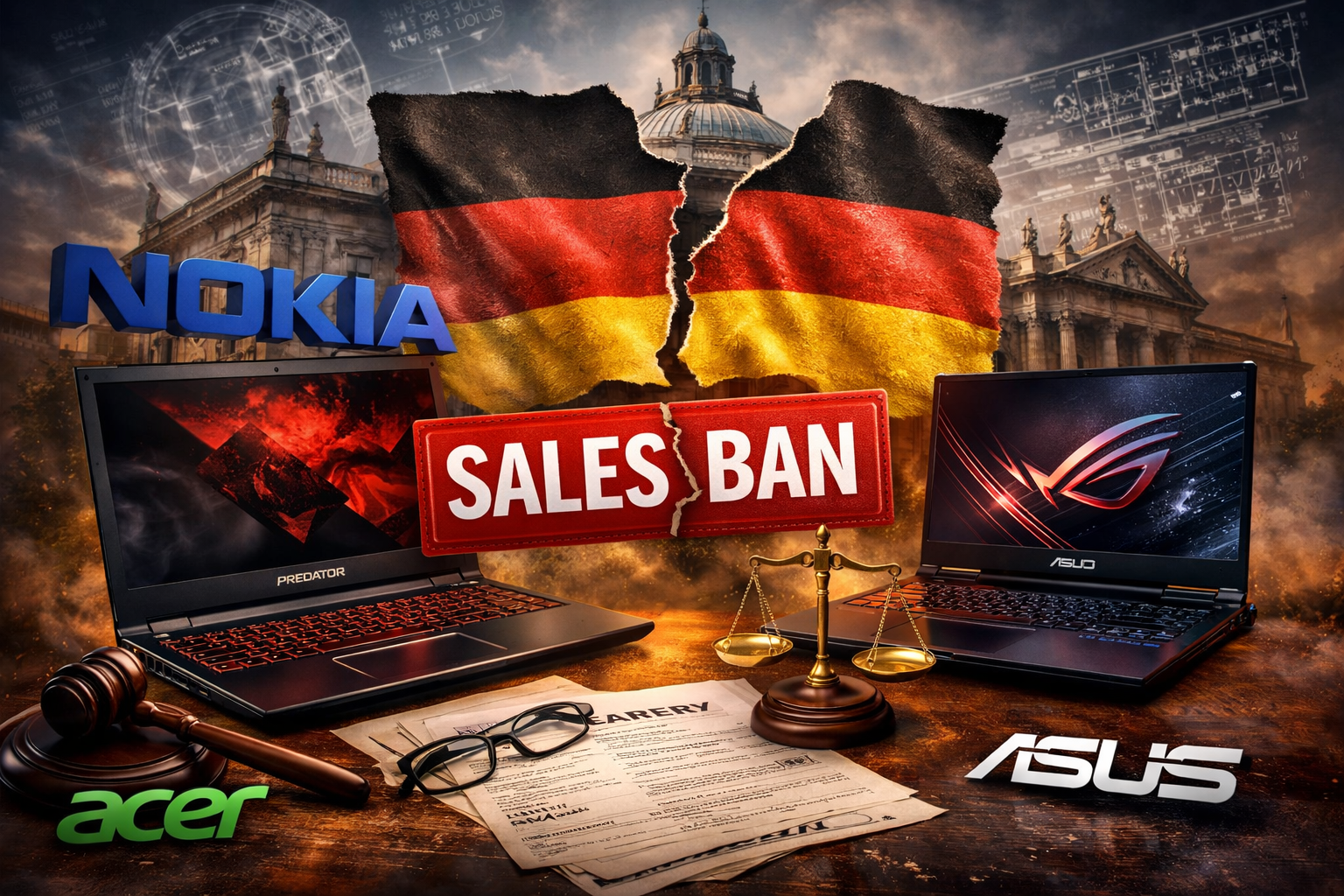
Tech markets in Germany saw sudden turbulence when reports emerged that certain Acer and ASUS products faced sales restrictions. Let’s unpack this properly—calmly, factually, and without panic headlines.
1. Why were Acer and ASUS sales restricted in Germany?
The issue revolves around patent infringement. A court found that certain devices allegedly used patented communication technology without a valid licensing agreement. In Germany, patent law is strict and enforcement can be swift—if infringement is confirmed, sales can be halted quickly.
2. Which company filed the complaint?
The dispute involves Finnish telecom giant Nokia, which claimed that its wireless communication patents were being used without proper licensing compensation.
3. Which German court handled the case?
The ruling came from the Munich Regional Court, one of Europe’s most influential courts for patent litigation. Munich is basically a battleground for high-stakes tech patent cases.
4. Which products were affected?
Not all products were banned. The restrictions primarily targeted certain models of:
- Laptops
- Gaming laptops
- Devices supporting wireless communication standards
Products from Acer and ASUS were impacted selectively—not a blanket ban on all items.
5. Is this a permanent ban?
No. These rulings are typically injunctions. The companies can:
- Appeal the decision
- Negotiate licensing agreements
- Modify products to comply
Patent disputes often end in settlements rather than long-term bans.
6. How does this affect German customers?
Customers in Germany may see limited availability of certain models, especially newer devices. Retailers may temporarily remove affected products from online and physical stores.
Warranty support and existing purchases are generally not affected.
7. Could other European countries see similar bans?
For now, the ruling applies specifically to Germany. However, if similar patent claims succeed in other EU courts, the issue could expand. Germany is often the first testing ground for such legal battles.
8. What have Acer and ASUS said?
Both companies indicated they are reviewing legal options and working toward resolving the licensing issue. They reassured customers that service and support remain operational.
9. Why is Germany so important in patent disputes?
Germany is Europe’s largest economy and a central hub for technology and manufacturing. Its courts are known for:
- Speedy patent rulings
- Strong enforcement
- Injunction-friendly decisions
Winning or losing a case in Germany can significantly impact a company’s European operations.
10. What could happen next?
Several outcomes are possible:
- A licensing agreement with Nokia
- A legal appeal
- Product redesign to remove disputed technology
- Settlement outside court
In the tech world, patent wars are less about drama and more about negotiation leverage. These battles often look explosive but usually end in contracts, not collapse.
This situation is not about product quality or consumer safety. It is about intellectual property economics—the invisible legal scaffolding behind every wireless chip and communication standard.
Modern laptops are not just metal and silicon. They are bundles of thousands of patented technologies. Miss one license, and the legal dominoes can start falling.
Technology runs on innovation. Innovation runs on patents. Patents run on money. And occasionally, the bill shows up in court.



Leave a Reply