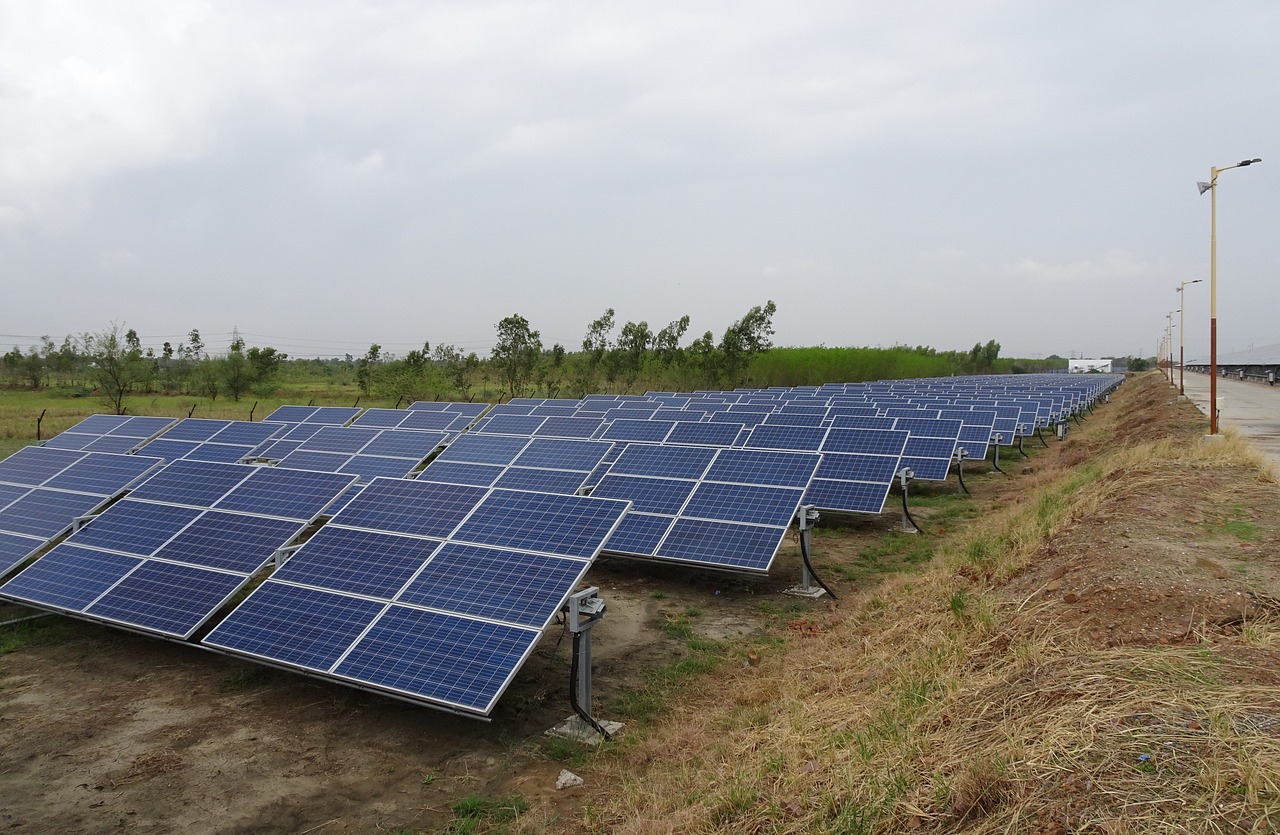
India’s power sector is undergoing a transformational shift, marked by record-high installed capacity, rising electricity demand, and an evolving generation mix. With a total installed capacity exceeding 475 GW, India has one of the largest power systems in the world. While coal still plays a dominant role, the momentum behind renewable energy—especially solar and wind—has never been stronger. This growth is increasingly challenging the assumption that India must continue adding new coal-fired power plants to meet future demand.
Recent trends show that India is meeting rising electricity demand more efficiently, with a growing share of renewable energy. In FY 2024–25, peak demand of 230 GW was recorded on 60 days, compared to none in FY 2023–24. The number of days with demand below 200 GW also dropped sharply from 116 to 37, signalling a structural rise in energy consumption. Even so, the country’s existing and under-construction capacity has proven sufficient to meet this demand.
A key insight comes from the daily demand profiles. In FY 2023–24, 305 of 366 days saw peak demand during solar hours—typically between 9 AM and 6 PM—when solar generation is strongest. In FY 2024–25, this figure was 256 out of 365 days. While non-solar hour peaks also rose—from 210.64 GW to 224.18 GW—they remained well within the operating range of India’s dispatchable sources, such as thermal, hydro, and gas.
India’s highest-ever power demand was recorded on 30 May 2024, reaching 250 GW during solar hours, with a shortage of only 0.1 GW. Significantly, only 188.24 GW of thermal capacity was operational at the time—the rest was offline for maintenance or due to forced outages. This shows that even under peak load conditions, India did not need to run its entire coal fleet. Instead, solar power—capable of contributing over 60 GW during the day—played a crucial role in bridging the gap.
Despite these advances, India continues to expand its coal capacity. According to a new report from the Centre for Research on Energy and Clean Air (CREA), 32.3 GW of coal-based thermal power is currently under construction, and an additional 23.55 GW falls under the stressed category. If all these projects are completed, India’s coal capacity would increase from the current 215 GW to 271 GW. This figure exceeds the projected requirement outlined in the Central Electricity Authority’s planning documents, indicating that the current pipeline is more than sufficient. Any further additions risk creating overcapacity and stranded assets—projects that are unable to recover their investment due to low utilisation.
Meanwhile, the renewable sector continues its remarkable growth. India has 234 GW of renewable energy capacity either under construction or in advanced stages of planning. As solar and wind installations rise, their impact on daytime demand is becoming more pronounced, reducing the pressure on coal plants and improving system reliability.
A recent study shows that India can meet its electricity demand through 2030 without adding any new coal capacity, provided it meets its 600 GW non-fossil fuel target. This includes 377 GW of solar, 148 GW of wind, 62 GW of hydro, and 20 GW of nuclear. Even under a scenario with accelerated demand growth, this high-renewables pathway remains the most cost-effective and environmentally sustainable option. It would reduce power procurement costs and cut emissions, all while maintaining supply reliability.
To realise this scenario, however, complementary investments are essential. This includes scaling up battery storage, upgrading the transmission network, and enhancing grid flexibility and coordination. According to another study, if battery storage costs decline by 15% annually, India could cap coal capacity at 260 GW by 2030, consistent with the targets in the National Electricity Plan. Even with more conservative storage cost declines of 7% per year, coal use would still plateau, with only modest additional capacity needed to manage non-solar peaks.
Crucially, renewable energy—**even after accounting for integration and balancing costs—**has already become cheaper than new coal-based generation. Investing further in coal not only risks economic inefficiency but also delays India’s clean energy transition.
The evidence is clear: India no longer needs to add coal capacity to secure its energy future. The path forward lies in accelerating renewables, strengthening grid infrastructure, expanding storage, and making better use of the existing thermal fleet. This approach would not only ensure energy security and affordability but also align with India’s climate commitments and long-term economic interests.
Source: CREA



Leave a Reply