Agriculture is entering a new digital era. With the help of Artificial Intelligence (AI), farming is becoming smarter, faster, and more productive than ever before. From automated irrigation systems to AI-powered crop monitoring, modern technology is helping farmers increase production while reducing costs and waste.
Smart farming using AI is now considered one of the biggest innovations in the agriculture industry.
What Is Smart Farming?
Smart farming refers to the use of advanced technologies like:
Artificial Intelligence (AI)
Internet of Things (IoT)
Drones
Sensors
Robotics
Data analytics
These technologies help farmers make better decisions, improve crop quality, and manage farms more efficiently.
How AI Is Changing Agriculture
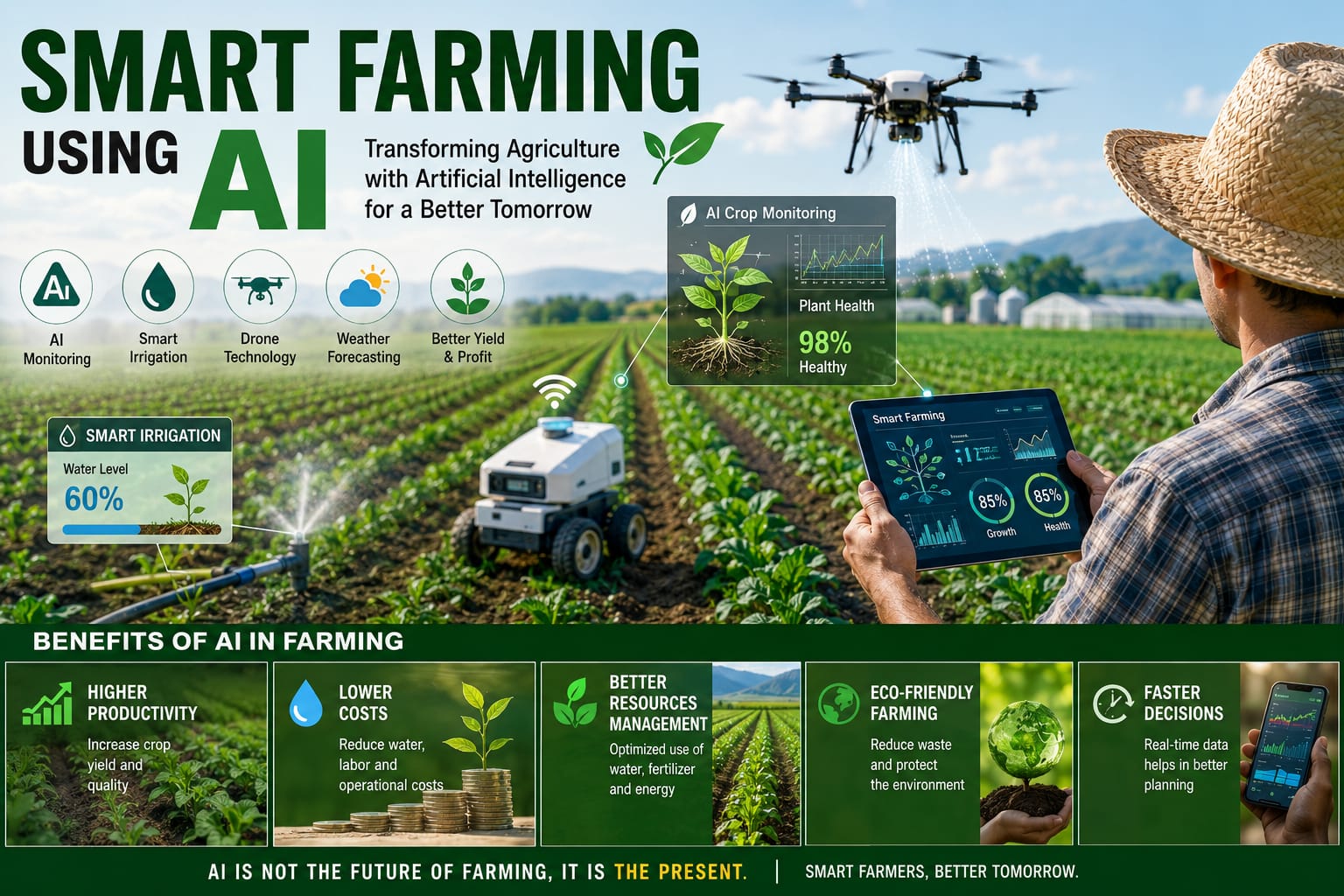
- AI-Based Crop Monitoring
AI-powered cameras and sensors can detect:
Plant diseases
Soil conditions
Water levels
Pest attacks
Farmers receive real-time information through mobile apps and smart systems, helping them take quick action before crops are damaged.
- Smart Irrigation Systems
AI systems analyze weather conditions and soil moisture to automatically control water usage. This reduces water waste and improves crop growth.
Benefits:
Saves water
Reduces electricity costs
Increases farming efficiency
- Drone Technology in Farming
Modern drones help farmers:
Monitor large farms
Spray fertilizers and pesticides
Capture crop health images
Track farming progress
Drone farming saves time and reduces manual labor.
- AI Weather Prediction
AI tools can predict:
Rainfall
Temperature changes
Storm risks
Crop-friendly conditions
This helps farmers plan planting and harvesting more accurately.
Benefits of Smart Farming Using AI
Higher Crop Production
AI improves farming accuracy, leading to better crop yields.
Lower Farming Costs
Automation reduces labor costs, fertilizer waste, and water usage.
Better Resource Management
Farmers can efficiently manage water, soil, and fertilizers.
Eco-Friendly Agriculture
Smart farming supports sustainable and environmentally friendly agriculture.
Faster Decision Making
Real-time farm data helps farmers make smarter decisions quickly.
Challenges of AI Farming
Despite its advantages, smart farming also faces some challenges:
High technology cost
Lack of digital knowledge in rural areas
Internet connectivity issues
Expensive smart equipment
However, governments and agriculture companies are working to make AI farming more affordable and accessible.
The Future of AI in Agriculture
Experts believe the future of farming will become highly automated. In coming years, we may see:
Fully robotic farms
AI-driven tractors
Smart harvesting machines
Climate-resistant farming systems
Countries around the world are investing heavily in agricultural technology to improve food production and support farmers.
Conclusion
Smart farming using AI is revolutionizing agriculture by improving productivity, reducing waste, and helping farmers make better decisions. As technology continues to advance, AI-based agriculture could become the foundation of future food production.
For farmers, adopting smart technology is no longer just an option — it is becoming a necessity for sustainable and profitable farming in the modern world.




Leave a Reply