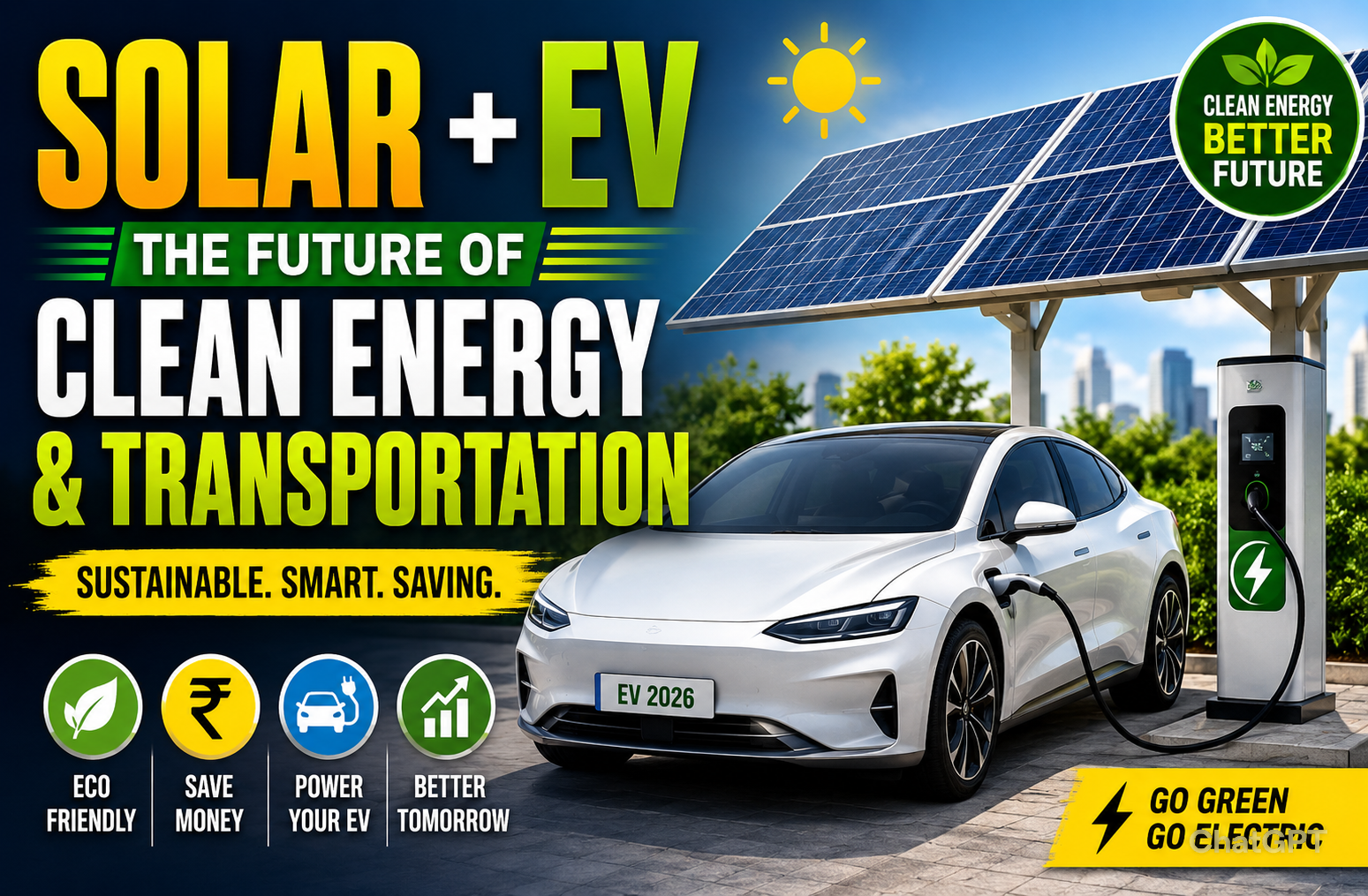
As the world moves toward cleaner and smarter energy solutions, Solar Energy and Electric Vehicles (EVs) are becoming two of the most powerful technologies shaping our future. Together, they create a sustainable ecosystem that reduces pollution, lowers energy costs, and supports a greener planet.
In 2026, the combination of solar power + EV charging is no longer just a trend—it is the future of transportation and energy.
What is Solar Energy?
Solar Energy is energy generated from sunlight using solar panels, which convert sunlight into electricity. It is clean, renewable, and available almost everywhere.
Benefits of Solar Energy:
- Reduces electricity bills
- Eco-friendly and pollution-free
- Low maintenance cost
- Renewable and unlimited source
- Government subsidies available in many countries
What are Electric Vehicles (EVs)?
Tesla Model 3 and other Electric Vehicles (EVs) run on electricity instead of petrol or diesel. They use rechargeable batteries and produce zero tailpipe emissions.
Types of EVs:
- Battery Electric Vehicles (BEV)
- Plug-in Hybrid Electric Vehicles (PHEV)
- Hybrid Electric Vehicles (HEV)
Benefits of EVs:
- Lower running cost
- Environment-friendly
- Quiet and smooth driving
- Less maintenance
- Reduced dependence on fuel
Why Solar + EV is a Perfect Combination
Imagine charging your electric car using sunlight.
That means:
✅ Free fuel from the sun
✅ Lower charging costs
✅ Less dependence on grid electricity
✅ Reduced carbon footprint
✅ Long-term savings
This combination is changing how people power their homes and vehicles.
How Solar EV Charging Works
- Solar panels installed on rooftops or charging stations capture sunlight.
- Solar inverter converts power into usable electricity.
- Electricity is stored in batteries or sent directly to EV chargers.
- Your EV charges using clean solar energy.
Simple, smart, and sustainable.
Advantages of Solar EV Charging
1. Save Money
After installation, sunlight is free—reducing long-term electricity and fuel costs.
2. Environment Friendly
Both solar and EVs reduce greenhouse gas emissions.
3. Energy Independence
Generate your own power instead of relying fully on the grid.
4. Smart Technology
Modern systems allow app-based monitoring and smart charging.
Solar EV Market Growth in 2026
Countries like India, United States, China, and Germany are investing heavily in:
- Solar charging stations
- EV infrastructure
- Government incentives
- Battery technology
Experts predict massive growth in the renewable mobility sector over the next decade.
Challenges of Solar + EV
- High initial installation cost
- Weather dependency of solar panels
- Battery replacement cost
- Charging infrastructure still growing in some regions
But technology is improving rapidly.
Future of Solar + EV
The future looks bright.
Soon we may see:
- Solar-powered highways
- Solar carports
- Home solar charging systems
- Smart EV cities
- Fully renewable transportation networks
Solar + EV is not just innovation—it is a lifestyle revolution.
Conclusion
Combining Solar Energy with Electric Vehicles is one of the smartest investments for a cleaner and more sustainable future. It saves money, protects the environment, and supports energy independence.
The future is electric.
The future is solar.
The future is now.




Leave a Reply